
For many, 2025 felt like a rollercoaster. It was a year marked by devastating losses and repeated disappointments, juxtaposed by surprising but powerful wins – often at the least expected moment.
For those working in gender equality spaces, 2025 often felt like swimming against the tide. Efforts to support progressive and more gender-equal norms are up against a broad coalition of well-funded and politically empowered global actors who seek to derail the hard-won progress women’s movements have fought so long for. This is abundantly clear when we examine the pivotal moments that have influenced the current direction of travel for efforts to promote more equal gender norms, women’s rights and LGBTQI+ inclusion.
Looking back at the year, this blog post highlights some of the key wins to remember, as well as the losses that loom large, presenting new challenges to what was once considered inevitable – the slow march towards genuine gender equality and justice.
Losses
USAID cuts and Europe’s retreat from development spending
There can be no mention of 2025 without reflecting on the huge turmoil set in motion by the USAID cuts in January, which marked a clear turning point in the Global North’s ongoing retreat from development spending. Although this trend had been building for years, the latest phase in the weakening of the global development paradigm was in many ways epitomised by the drastic cuts following Trump’s election.
The slashing of USAID funding alone continues to have extensive impacts across the sector, with UN agencies, gender equality, inclusion, and sexual and reproductive health programmes most heavily targeted. The UN Population Fund was particularly hit, with funding cuts amounting to $377 million from the termination of 48 grants that supported maternal health, protection from violence, rape treatment and other life-saving services in crisis settings across more than 25 countries.
Despite a deepening anti-gender backlash, this approach was mirrored by other donors that had been seen as leaders on women’s rights, such as the UK and the Netherlands. Our full analysis of what happened and the likely impacts remain just as relevant now.
Multilateralism under strain
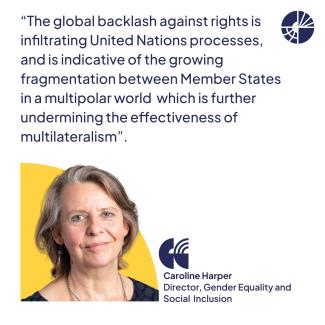
Last year represented a further step away from a human rights framework as the basis for international cooperation and multilateralism. The 80th session of the UN General Assembly in New York was overshadowed by existential questions about the UN’s future sustainability, relevance and effectiveness as a major international institution promoting peace, development, human rights, security and equality.
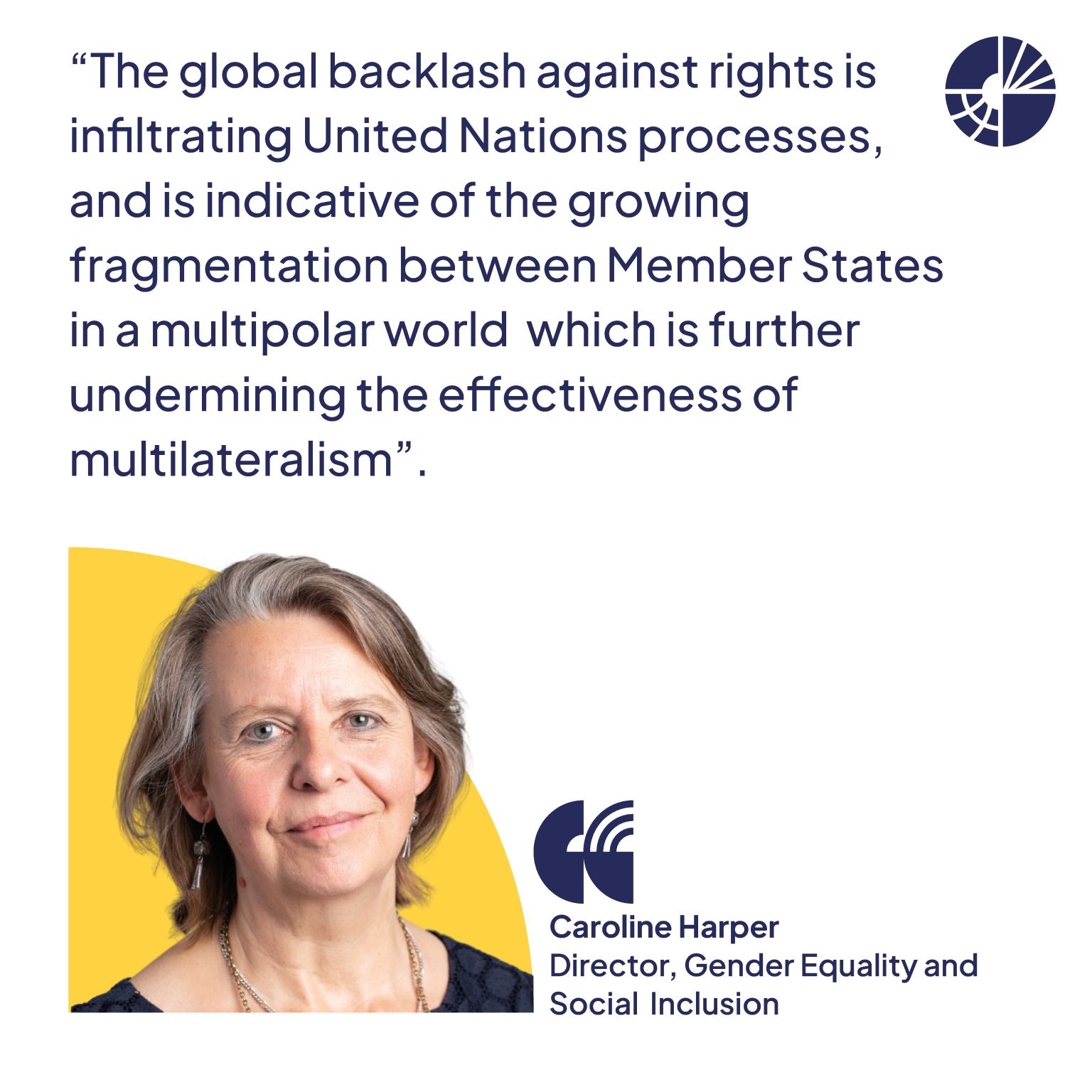
It was the first time in the UN’s history that the US stepped back as the largest donor, with potentially grave implications for the institution and the UN programmes which carry out life-saving work across the world. And in this increasingly polarised geopolitical landscape, negotiations on women’s rights – particularly sexual, reproductive and LGBTQI+ rights – became ever more contentious, with language previously considered settled now fiercely contested.
Democracy on the edge
The broader democratic context in which gender equality struggles unfold, continued to deteriorate. According to new research last year, around 72% of the world now lives under authoritarian rule, up from 42% in 2004, with V-Dem noting that autocracies now outnumber democracies for the first time in 20 years.
Contributing to the dispiriting state of democracy is the overwhelming barrage of online abuse that women in public life face. ALIGN’s new research on digital threats in Brazil and Nigeria exposes the scale and ferocity of tech-facilitated gender-based violence (TF-GBV) against women politicians. It exposes how abuse is rooted in misogynistic gender norms, often perpetrated by colleagues from within their own party, and has cascading offline impacts which undermine equal representation. The evidence clearly shows that TF-GBV is more than just a women’s issue, posing a critical threat to the strength and integrity of democracy, yet political parties are not doing enough to address it.
Politicised religion gaining ground
In the US, the influence of Project 2025 has further illustrated how religious conservatism is being strategically embedded within state institutions, with long-term implications for both gender equality and LGBTQI+ rights domestically and globally. Across many other contexts, politicised religious narratives continue to be mobilised to roll back women’s rights and reinforce restrictive gender norms, often stalling debates around family law and women’s bodily autonomy.
ALIGN studies from Pakistan and Sierra Leone show how religious actors, often aligned with political elites, have influenced the implementation of comprehensive sexuality education (CSE). Even though CSE has expanded in various contexts, it remains highly contested. While the opposition rarely calls for these programmes to be removed altogether, they often push to reshape how sensitive topics, such as puberty, child marriage and bodily autonomy, are discussed. One response is to reframe aspects of this work as ‘life-skills based education’, to continue to make progress while operating within religious and socially conservative norms.
Localisation of the backlash
The backlash to women’s and LGBTQI+ rights continued to unfold across 2025 – notably playing out across the African continent. The Gambia came to the brink of being the first country to repeal its ban on female genital mutilation. So far, the ban has been upheld, but an ongoing Supreme Court challenge risks calling this law into question again. Robust and independent political processes have been important for upholding the criminalisation of the practice, as our research shows.
In Kenya, strong, rights-based courts and the Constitution have also been a critical safety net for those resisting anti-homosexuality and anti-trans legislation. Foreign anti-rights actors have poured money into East Africa to oppress queer people, eradicate abortion rights and promote Christian ‘family values’. Rather than supporting ‘African values’ and ‘national sovereignty’, as claimed, this is increasingly recognised as a form of neocolonialism.
Foreign actors have also waded into Sierra Leone’s debate on abortion rights, where President Julius Maada Bio faces opposition to his gender equality agenda, including access to the safe termination of pregnancy. Our analysis identified that, to resist the global backlash and counteract anti-rights influence, it is necessary to build domestic support for norms change towards gender equality, as Bio’s government is doing.
Wins
More attention to masculinities
One of the more unexpected shifts of 2025 was a rapid rise in public and policy interest in masculinities. There can be no doubt that Netflix’s Adolescence played a role, sparking widespread debate about boys and young men, and their access to harmful content promoting gender-based violence on the manosphere. Some of the dynamics and gender norms behind these trends were explored in a powerful Think Change podcast episode on online misogyny.
Riding on a wave of renewed attention to masculinities, ODI and ALIGN partnered with Beyond Equality to host a powerful discussion on the role of education in tackling misogyny. ALIGN offered insights based on our global research that pulled out lessons on what works to support boys in the classroom.
The year marked a significant moment for those working on gender equality with young people in the UK, with attention to masculinities gaining visibility and recognition, helping to push forward strategies focused on prevention and relationships and sex education to support gender norm change.

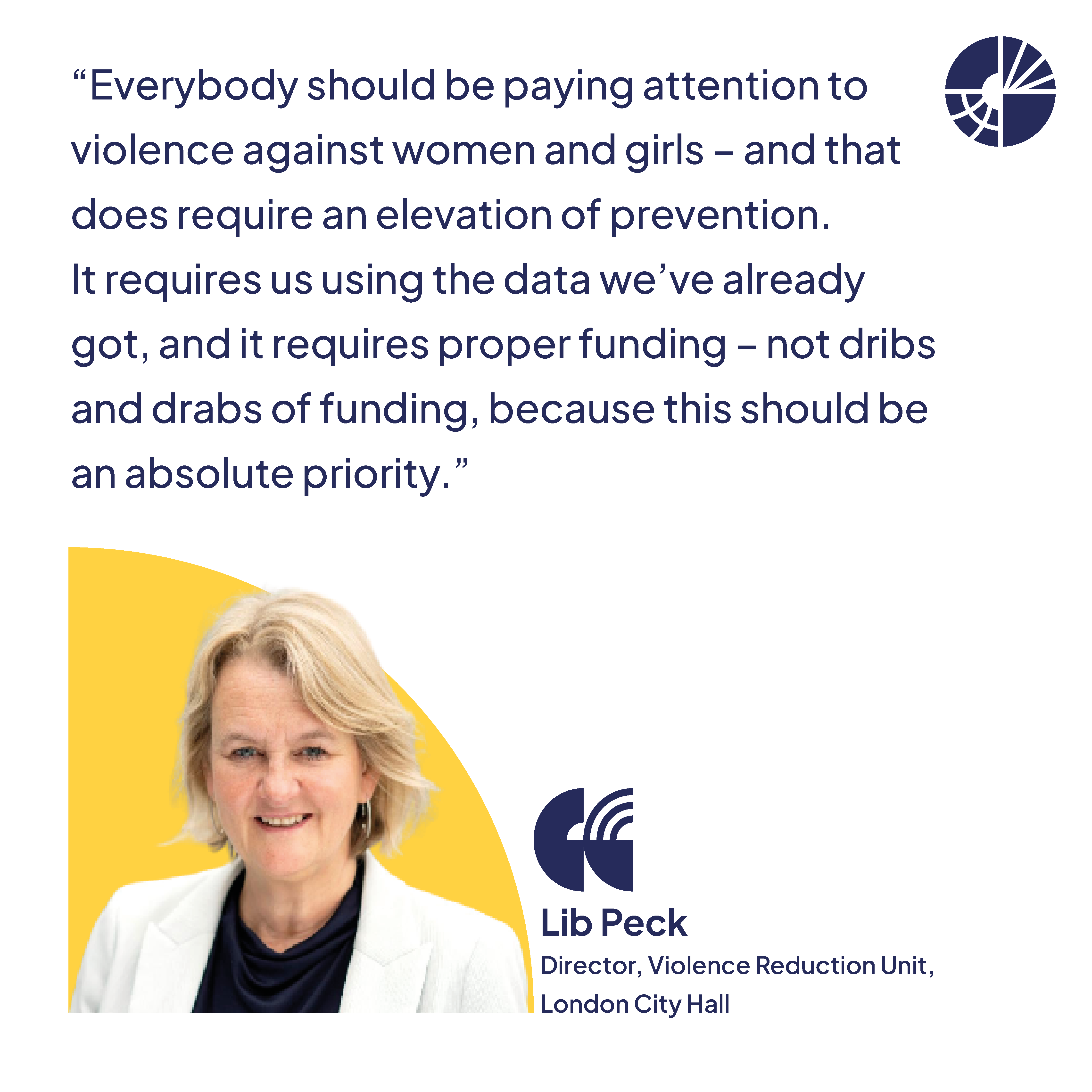
But boys don’t just need help navigating masculinity in the classroom. The influence of social media is powerful. Our research on boys’ use of online platforms in Mexico highlighted that, alongside exposure to misogynistic and violent material, offline gender norms shape how young people engage with the content they see. That's why our wider research points to the importance of prevention-focused approaches, including arts-based initiatives, that recognise adolescent boys as both influenced by and capable of critically navigating digital environments.
Holding the line on LGBTQI+ rights
In a year marked by intense backlash, simply holding ground became a significant achievement. The Global Philanthropy Project raised an unprecedented $182 million for LGBTQI+ movements worldwide, sending a strong signal of solidarity at a critical moment. Another surprising win came at the multilateral level, with the successful vote at the Human Rights Council in July for the renewal of the UN Independent Expert mandate on sexual orientation and gender identity.
To support greater attention on the links between gender equality and LGBTQI+ inclusion efforts, ALIGN published a new explainer laying out seven ways gender norms shape queer lives. Unpacking topics like compulsory heterosexuality, rising violence and discrimination, and the politicisation of trans rights, it provides a clear resource for anyone interested in building more LGBTQI+ inclusive and equal societies.
Care gaining political traction
Care emerged as one of the most promising areas of progress of 2025, with Latin America providing much-needed political leadership and ambition. The Regional Conference on Women in Latin America and the Caribbean in Mexico City landed on a bold vision for the continent, with the region’s governments adopting the Tlatelolco Commitment, committing to, among other things, recognise the foundational role of care; invest in enhancing care through public policies and comprehensive care systems; and promote the more equitable sharing of care between the state and people of all genders.
This inspiring approach to building a more caring society complements lessons learnt from a decade of care systems in pioneering nations like Uruguay, where ALIGN partner research shows that these systems reduce the unequal distribution of unpaid care work, contribute to women’s economic autonomy and decision-making power, and can even help identify and address issues of gender-based violence.
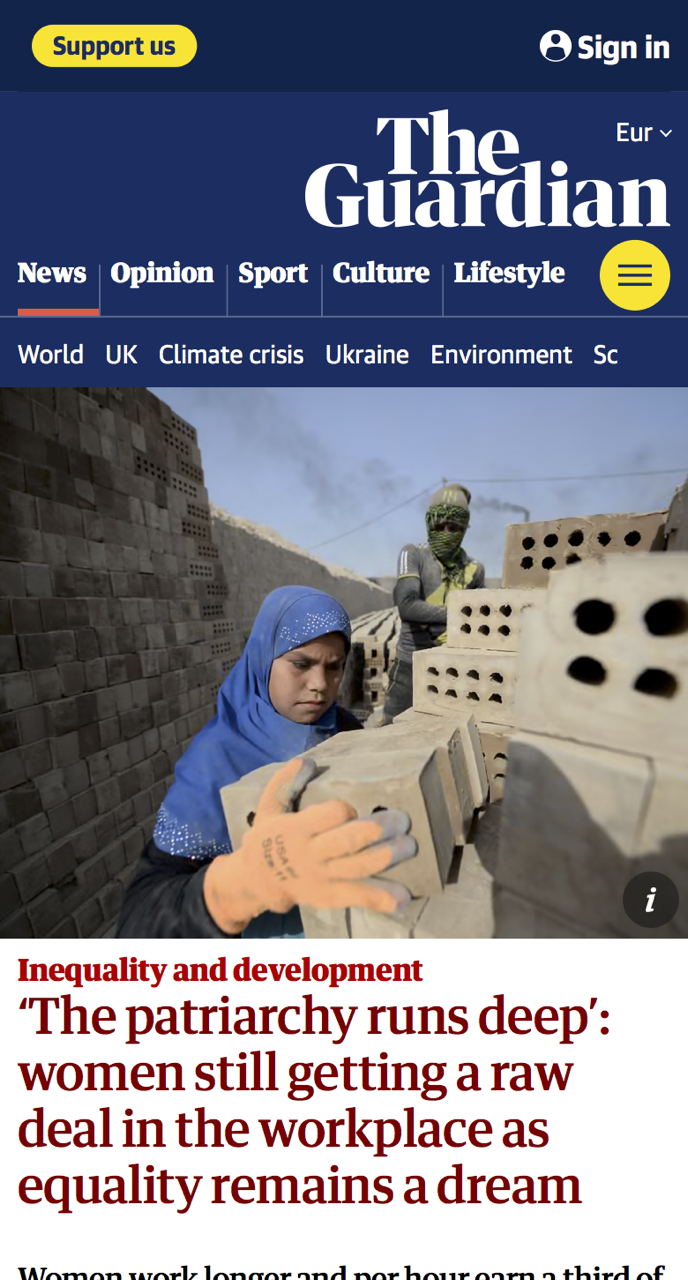
Elsewhere, Kenya is set to become one of the first African nations to implement a comprehensive National Care Policy, developed by the Department for Gender and Affirmative Action. And, proving that gender equality can be a motivating electoral winner, it is also worth mentioning the stunning victory of Mayor Zohran Mamdani in New York, who stood on a policy platform that included free childcare to all children from six weeks to five years old. In a world where women’s earnings remain stagnant as a proportion of global income, it is clear that the gender care and pay gap is profoundly unfair and that, as we commented in The Guardian, there has been ‘so little progress because unpaid care work still largely falls on women’s shoulders’.
Growing awareness of how women’s movements defend democracy
Women’s movements are often dismissed as marginal to the survival of democratic systems, but feminist mobilisations have been at the forefront of democratic struggles for decades. In 2025, we witnessed more of those in the gender sector making connections between the strength of democracy and the role of women’s movements, elevating the case at the G20, the G7 meetings in Canada, and the Feminist Foreign Policy (FFP) conference in Paris. This is a major win for gender equality advocates, as the case becomes clearer that the stability, security and prosperity of nations depends on open civic space and the promotion of women’s voices that are often on the front line of advocating for democratic rule.
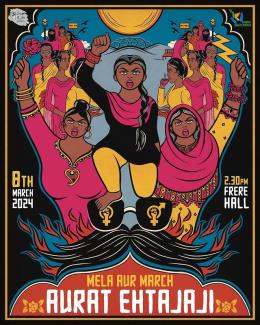
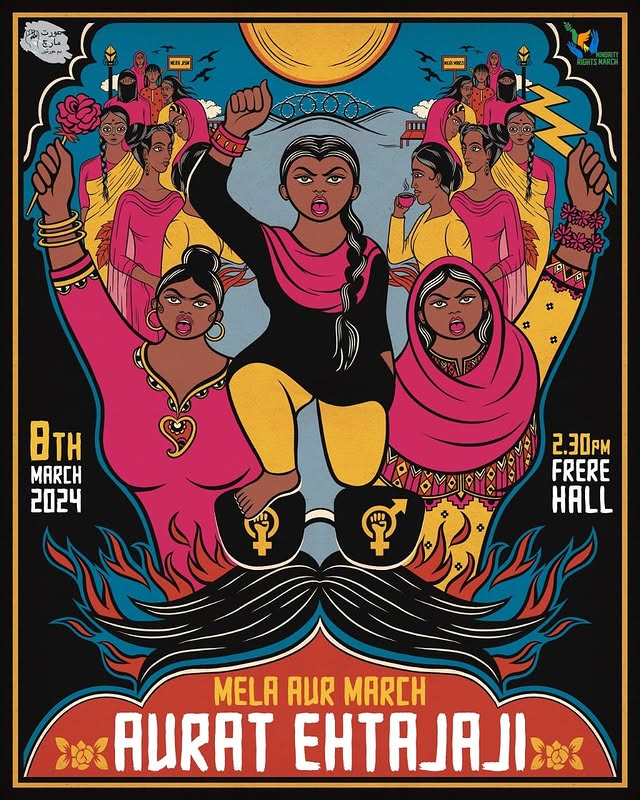
Art can be a vital tool in this struggle. Feminist movements and organisations have long engaged in artivism and arts-based gender programming, as working through art offers different possibilities. Art is not only an effective tool to promote equitable gender norms – a pre-requisite of a truly democratic society – but also an avenue for action and resistance in contexts where civic space is shrinking. Working with art can also strengthen democracy, as it supports movement building and resilience and brings people together, fosters collaborative modes of working and widens representational power – actions that are crucial to holding the line on gender equality and LGBTQI+ recognition in the context of increasing polarisation and backlash.
Feminist foreign policy political declaration
Despite setbacks, FFP survived another turbulent year. The joint political declaration following the 4th Ministerial Conference on FFP reaffirmed commitments to gender equality in diplomacy, development and peacebuilding. Not only that, but the 2025 meeting significantly widened the tent of participation, with over 55 states in attendance. This proves that the FFP conferences remain an important multilateral space adjacent to the UN system. In 2026, it will remain a vital forum to shape debates and generate a shared language for feminist visions across borders while providing like-minded government actors a space to engage on a progressive policy agenda.
What’s in store for 2026?
As ALIGN’s research consistently shows, gender equality is not a ‘side issue’ to be addressed when conditions are favourable. It is fundamental to democracy, care, peace and justice – and it remains as urgent now as ever.
Our work in 2026 will focus on lessons for like-minded states around navigating negotiations in multilateral spaces, especially at the Human Rights Council. Forthcoming research will focus on how to hold the line on inclusive gender norms while previously agreed gender equality language faces even greater pushback.
Contributing to the evidence base around democratic resilience, our work will continue to focus on the role civil society plays in defending democracy, showing how LGBTQI+ movements are essential actors in a thriving ecosystem of civic mobilisation – often the first to face attacks and the last line of defence against erosions of human rights norms. We will be continuing to explore the potential of different ways of tackling online misogyny, including through education.
Our attention will also be on the overlapping backlash to climate action and gender equality, and on socially equitable and gender-just transitions to low-carbon economies, with an initial focus on how women’s equitable participation in the renewable energy sector can be better supported.
Whatever else 2026 has in store, ALIGN will continue to research and support the long-term, systemic and intersectional work of gender norm change, championing the activists and movements leading this work to build a more just and equitable future for all.


