
The parliaments of the Pacific Islands are not known for their gender inclusivity; on average, over 90% of the region’s parliamentarians are – and have always been – men. There is of course some variation both among countries and over time. Cook Islands, Fiji and Samoa have had more consistent female representation than Papua New Guinea or Vanuatu, for example.
In new research, I have explored the underlying norms and practices of resistance to women’s full and equal inclusion in the parliaments of one of these Pacific islands - Fiji. Since 2022, women have accounted for less than 10% cent of parliamentarians, a drop from almost 20% following the 2018 elections. Post-election analysis has suggested that the reduced diversity of the parliament in 2022 was primarily due to gender-blind and race-blind electoral provisions that resulted in the dominance of militarised and Indigenous Fijian male interests.
‘Where do we draw the line? Our culture and sexual equality? We need to be very sensitive and careful of that. According to our culture, women are respected, women are loved, everything is done for the women. Sometimes, the women try to be like men. Sexuality according to me needs to go to a certain level where they are loved, respected, and promoted. But, not to overstep the culture.’
– Male Opposition MP
Misogyny plays out intensively for specific women, particularly online, with explicit images being leaked (in the case of Lynda Tabuya) or digitally manipulated (in the case of Lenora Qereqeretabua). A more widespread finding among most women MPs is the large number of stereotypical or sexist comments about women, including their appearance.
This research presents a clear call for donors across the Pacific region (and perhaps globally) to spend more time uncovering and understanding these (often intangible) norms and practices, and work with local champions who are intrinsically motivated to resist them, when designing support for women's political participation and leadership.
Reinstating parliament: from international exclusion to inclusion
The Parliament of Fiji has had a tumultuous history. With four coup d’etats staged in its precincts since the country’s independence in 1970, a succession of ‘strong men’ have led the country – including two coup leaders. This has marked politics, in the words of the scholar Romitesh Kant, as 'the domain not just of men, but of hyper masculine, militaristic men'.
International actors – notably, the United Nations Development Programme (UNDP), the Inter-Parliamentary Union (IPU), and the Commonwealth Parliamentary Association (CPA) – have been frequent visitors to Fiji. They have poured significant funding into activities to improve its function and effectiveness, and always included activities to promote a more gender-sensitive parliament. This has resulted in a suite of measures that, on paper, suggest the parliament supports gender equality as a democratic goal.
In 2014, the standing orders were amended to include a provision by which its six parliamentary committees would incorporate a gender perspective throughout their inquiries. With the election of a female speaker in 2014, a Speaker’s Debate series was initiated, including dedicated forums to discuss women’s political participation. And in 2019, the Commonwealth Women Parliamentarians (CWP) group was formed to bring women members of parliament (MPs) together across political parties. And yet, an underlying and persistent current of resistance to women’s political equality runs deep in Fiji, ensuring that these policy measures remain superficial and ineffective.
In my book, I uncover two specific narratives of resistance; first, that gender equality, as an internationally defined concept, runs counter to Fijian cultures (including, but not limited to, its Indigenous iTaukei culture) and religious practices. And second, that gender equality initiatives, often designed by international actors, are a form of ‘reverse discrimination’, resulting in inequalities for men. These overarching narratives are not in themselves peculiar to Fiji, but they are expressed in Fijian idioms and practices, and betray misunderstandings of both gender equality and local cultures.
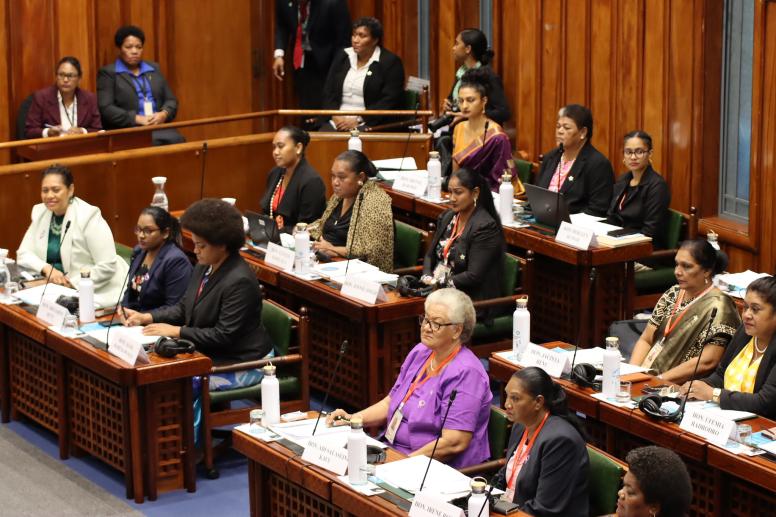
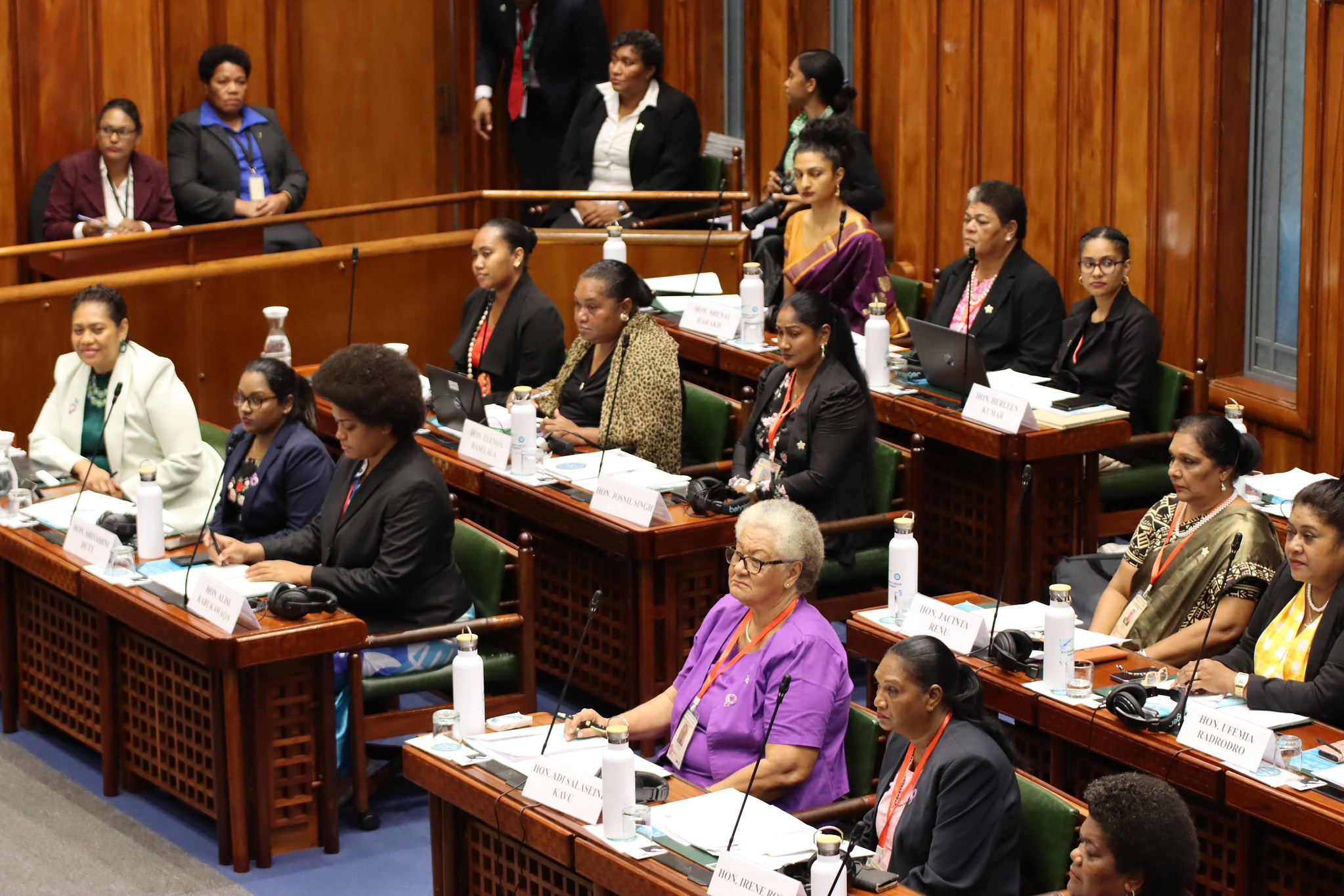
‘Anti-culture’ and ‘anti-religion’ narratives
Resistance to gender equality is rarely expressed explicitly; rather it is expressed as the opinion of others. When it is voiced openly, however, gender equality is presented as a threat to Fijian traditional governance systems that prioritise the leadership and decision-making rights of (some) men. Resistance, therefore, is framed as necessary to protect and preserve Fijian cultures.
Male parliamentarians have presented opposition to gender equality as a reflection of attitudes they observe in the societies they represent:
‘This gender equality is more accepted in the urban [areas] and with educated people. In the rural [areas] and [among] uneducated [people] it is more difficult to teach, and for acceptance.’
– Male Opposition MP
This resistance narrative is kept alive through strategies of stalling and disrespecting women. When stalling, resisters suggest they simply need more time and information to be persuaded that gender equality is for the common good. In reality, they have no intention of engaging constructively because they know what they might stand to lose from a redistribution of political power.
Stalling is evident in male MPs’ apparent calls for ‘more training’ despite their constant refrain that it is ‘too difficult’ to change. Resisters rarely see a role for themselves in modelling norm change:
‘Our male mindsets still have to change... Still, it is very late for us. It should start from home. If it doesn’t start from home, we can’t do it in our parliament.’
– Male Government MP
Resisters also display disrespect towards women, especially women’s contributions to political debate and decision-making as a way of reasserting the norm that politics is more appropriately the domain of men. This was particularly evident in the high-profile case of Tabuya’s leaked private video, which initially resulted in her being dismissed from the ministry in late 2024. After months of speculation, her party eventually decided not to expel her from parliament, finding she was not responsible for the leaked video. Throughout this period, Tabuya’s privacy and safety were rarely acknowledged; more prominent were narratives of her alleged immorality, highlighted as a mark of her misalignment both with politics and with ‘the proper’ role of Fijian women.
Disrespect is often masked in the Fijian sense of humour known as 'veiwali', or distracting noises and interruptions when women speak:
‘Parliament mirrors other traditional and conservative cultures in Fiji ... If women talk, or raise concerns…if [they] stand up and say something that is actually good, [there are] the gestures, the small grunts, the small noises that people make at the back, just because it is a woman standing up to tell her point that actually matters, and is actually true.’
– Male parliamentary staffer
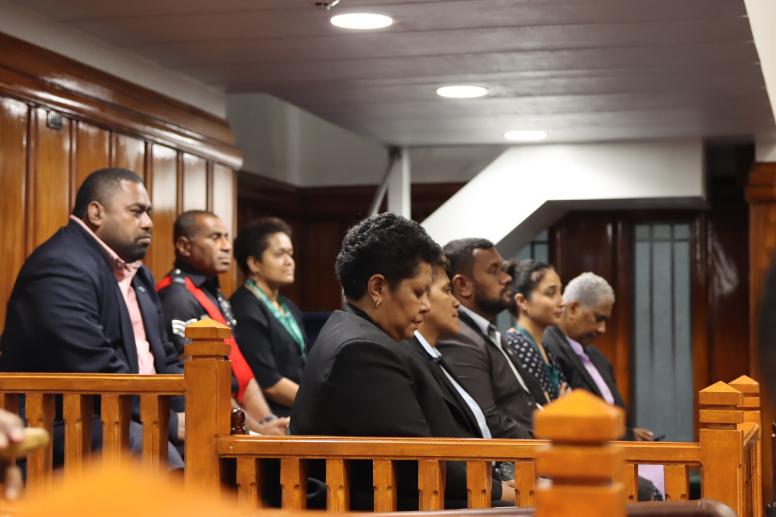
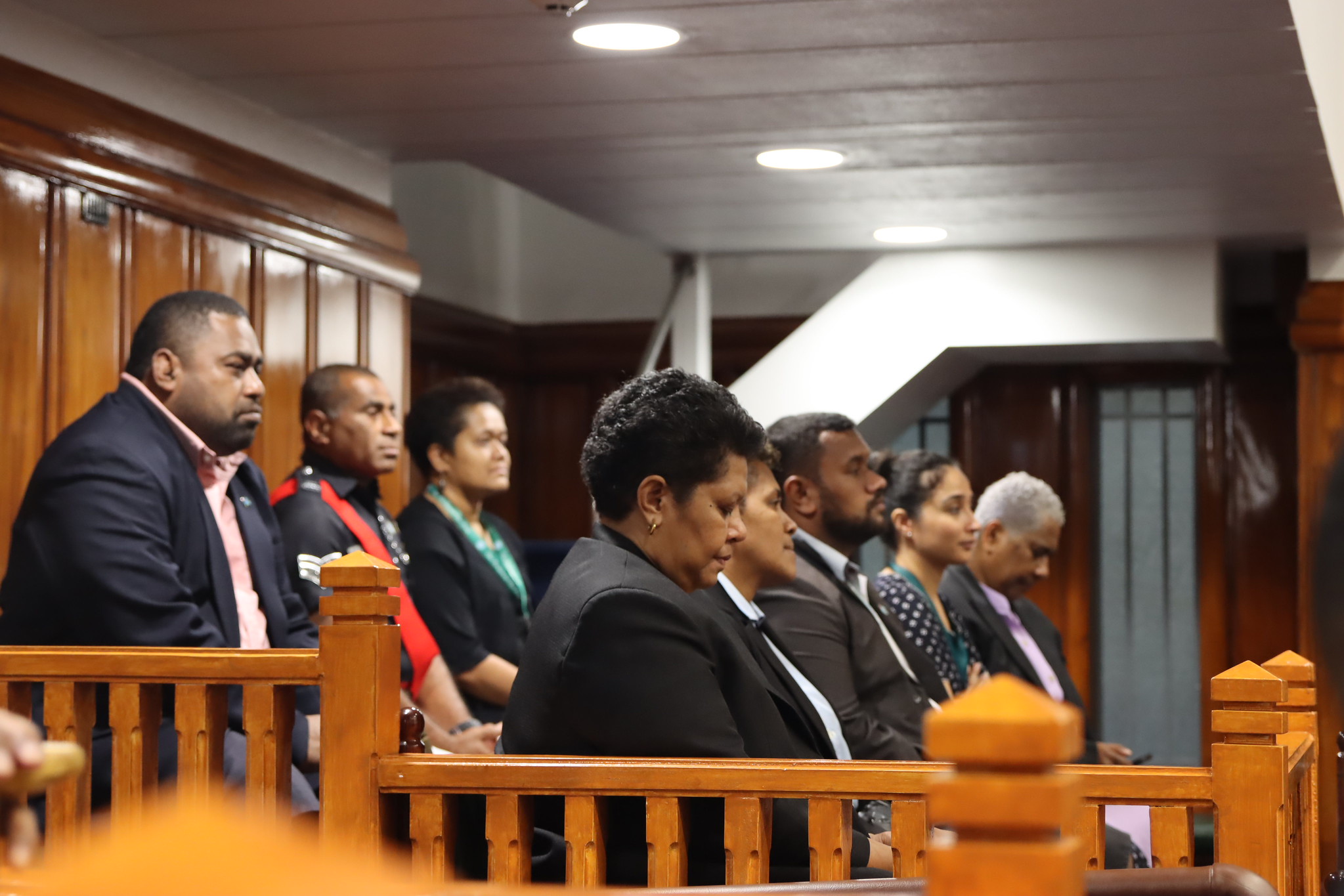
‘Reverse discrimination’
The reverse discrimination narrative in Fiji is underpinned by a false argument that women are not, in fact, actually or unfairly disadvantaged. The creation of the CWP for example was seen as favouritism towards women MPs and, therefore, discrimination against men MPs.
The reverse discrimination narrative is executed through strategies of distancing and deflecting. That is, resisters distance themselves from responsibility for any perceived gender inequality, instead deflecting this responsibility to others, notably women. As a male committee clerk reported, despite the requirement to consider the principle of gender equality, some male MPs did not see themselves responsible for gender analysis.
‘I would get questions from my [male] members like, “What is the need for this? Why are we doing this? Shouldn’t we be focusing on the technical aspect of the report? Why the gender bit?”’
– Male Clerk
In distancing themselves from gender equality efforts, some male MPs remarked that it was a shame that ‘women do not support each other’. A common theme in Fijian (and Pacific) politics is that women are ‘too jealous’ to support each other. According to this trope, women will not vote for women because they do not like to see them hold more power than is socially acceptable. This is despite the common practice of men – husbands, brothers, fathers – determining a family’s preferred candidate. When male parliamentarians deflect responsibility for gender equality to women, they do so knowing that women generally have limited agency to support women in politics, and that political parties also expect women to disagree with each other.
Resistance narratives and strategies perpetuated by male parliamentarians, often justified as a reflection of broader pushback to gender equality in society, undermine the effectiveness of gender equality policies and procedures. They also undermine the tireless – and increasingly unsafe – work of feminist civil society organisations that have continued to argue in favour of gender equality in Fiji, including through the support of women electoral candidates and gender mainstreaming practices in parliament.
More research is needed to make explicit and visible the ‘hidden’ narratives and discourses that frame resistance. Because resistance to gender equality in Fiji often flourishes in the unspoken and in misinterpretation, rather than in the overt legal or regulatory forms, uncovering these narratives is essential in our collective counterattack.
There are also lessons to be learned for the international parliamentary development community. Women-only activities, such as the CWP, have unfortunately reinforced a view that gender equality is only about women rather than power and relationships. Gender-sensitive support must include men and be co-designed with local input, and specifically, include the perspective of local civil society organisations that understand where the real entry points for political change are.
About the author
Sonia Palmieri is an Associate Professor with the Department of Pacific Affairs at the Australian National University. Her research interests lie in the social and cultural conditions that legitimise women's leadership in political institutions, including parliaments.


